TAEC HEIRLOOM COLLECTION
Our Heirloom Collection brings together the finest expressions of traditional Lao craftsmanship — rare, museum-quality pieces created using skills passed down through generations. Each work is not only an object of beauty, but a living record of cultural knowledge, identity, and continuity. For centuries, artisans in Laos crafted objects for daily life, ceremonies, and community rituals, with skills learned within families and villages and imbued with meaning far beyond their practical use. Today, however, industrial production and changing livelihoods place many of these traditions at risk, as fewer young people have the time or opportunity to master such demanding techniques.
As we encountered communities selling antique pieces — irreplaceable objects that carried both history and knowledge, we saw the opportunity to work directly with master artisans to create faithful replicas or new interpretations rooted in the same techniques and traditions. In doing so, the originals remain within their communities, and the knowledge of how to make them is kept alive.
We invite you to engage with living traditions — and to support the artisans who ensure these remarkable skills continue into the future.
BRIDAL HEADSCARF
Handmade by Iu Mien artisans
Phoudonthan Village, Luang Namtha
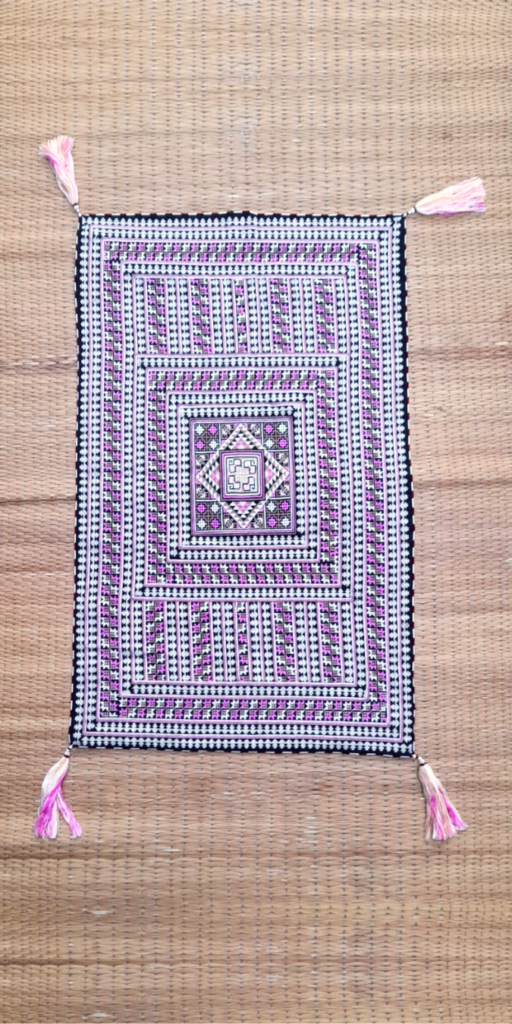
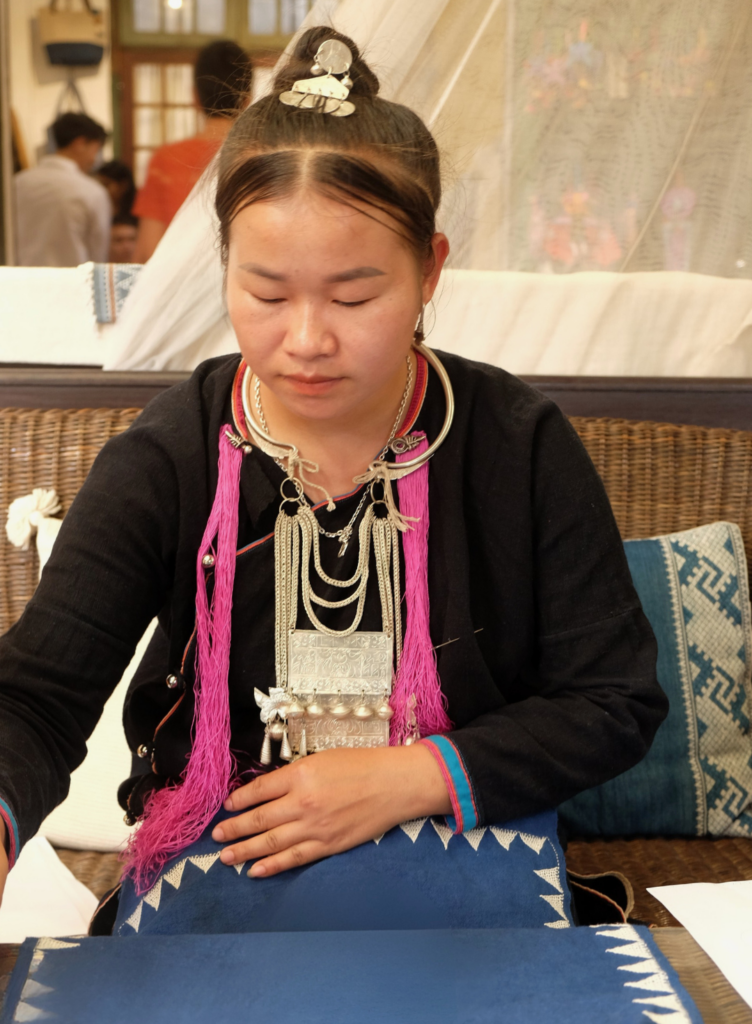
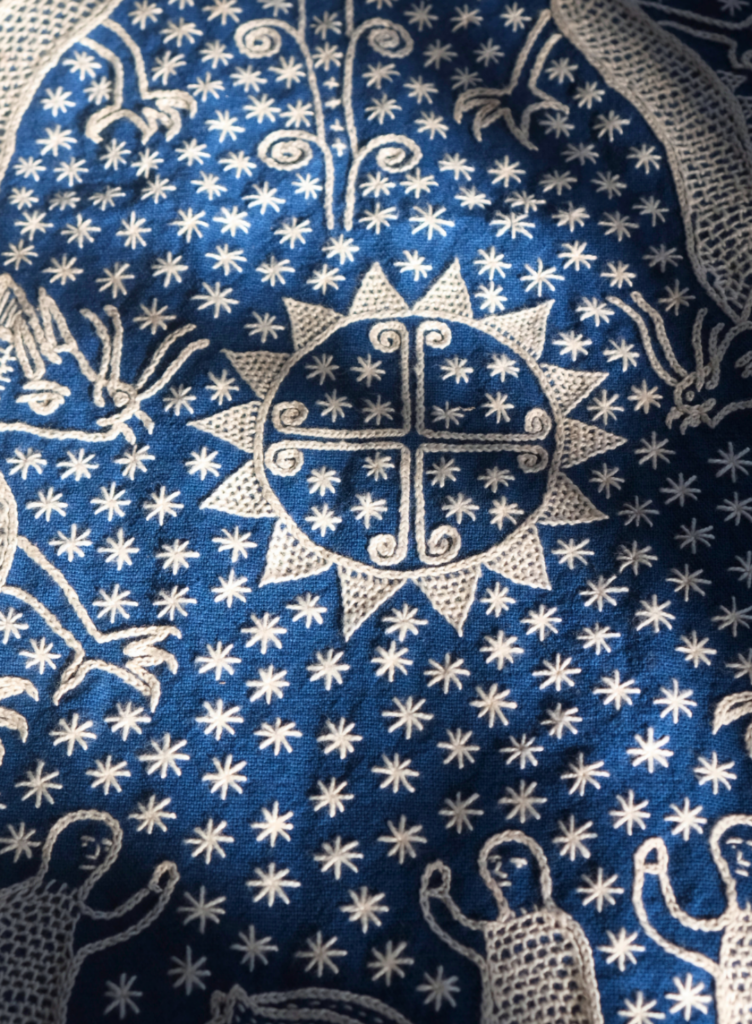
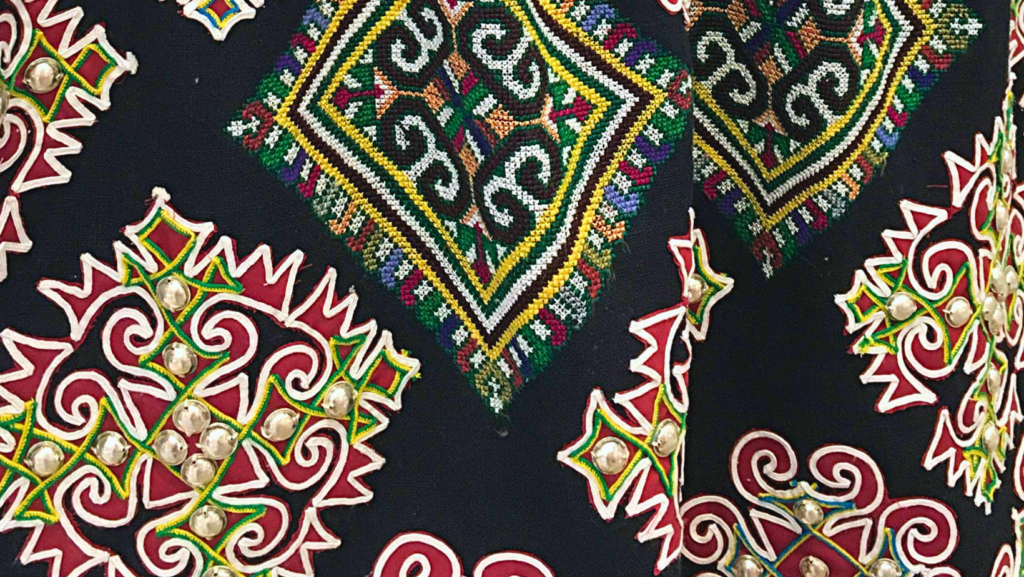
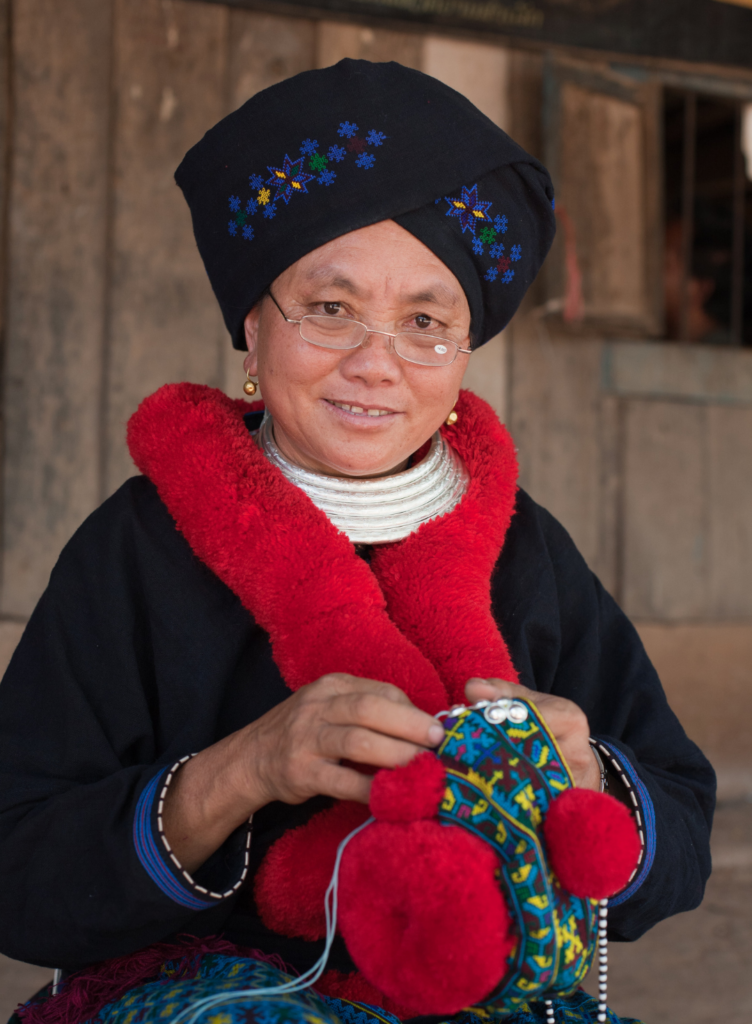
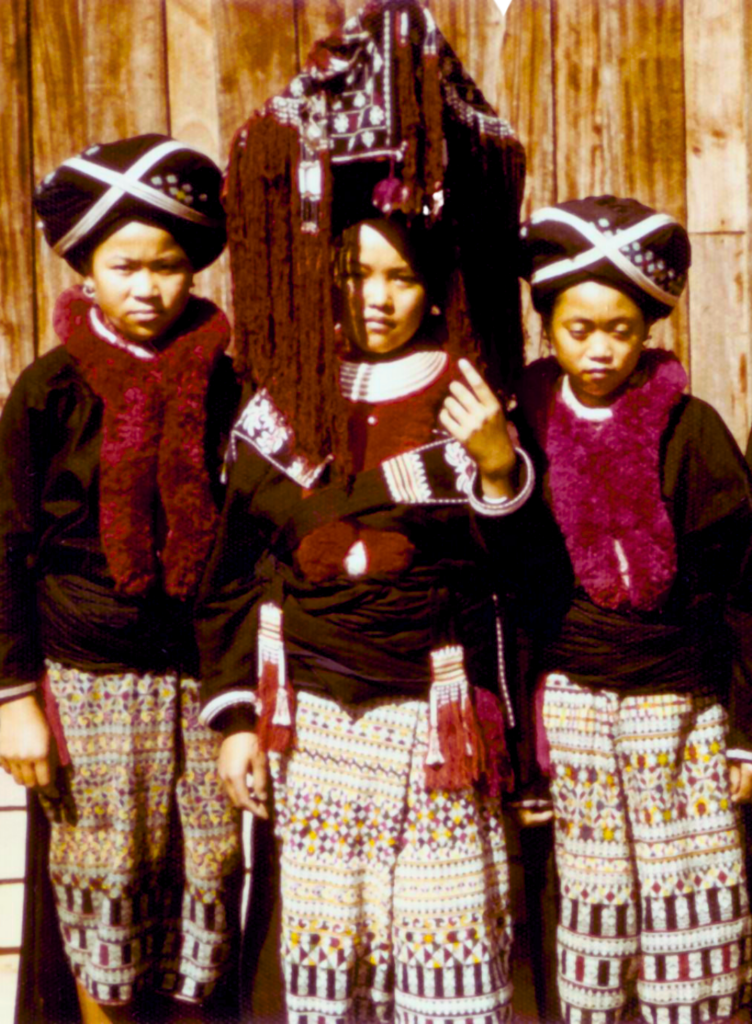
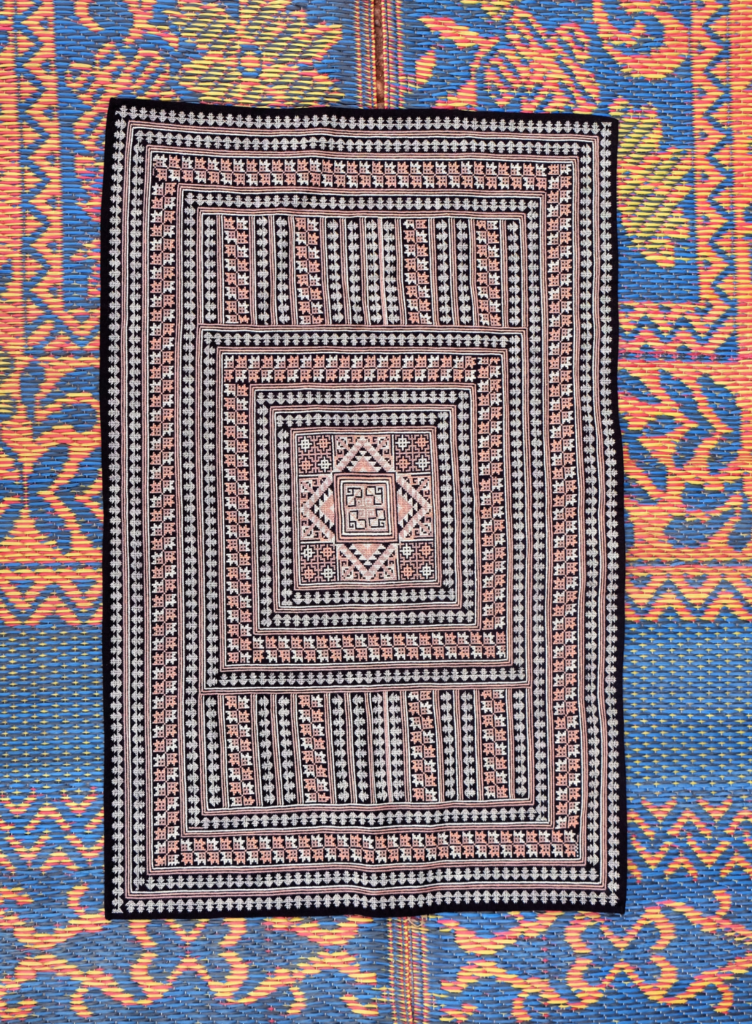
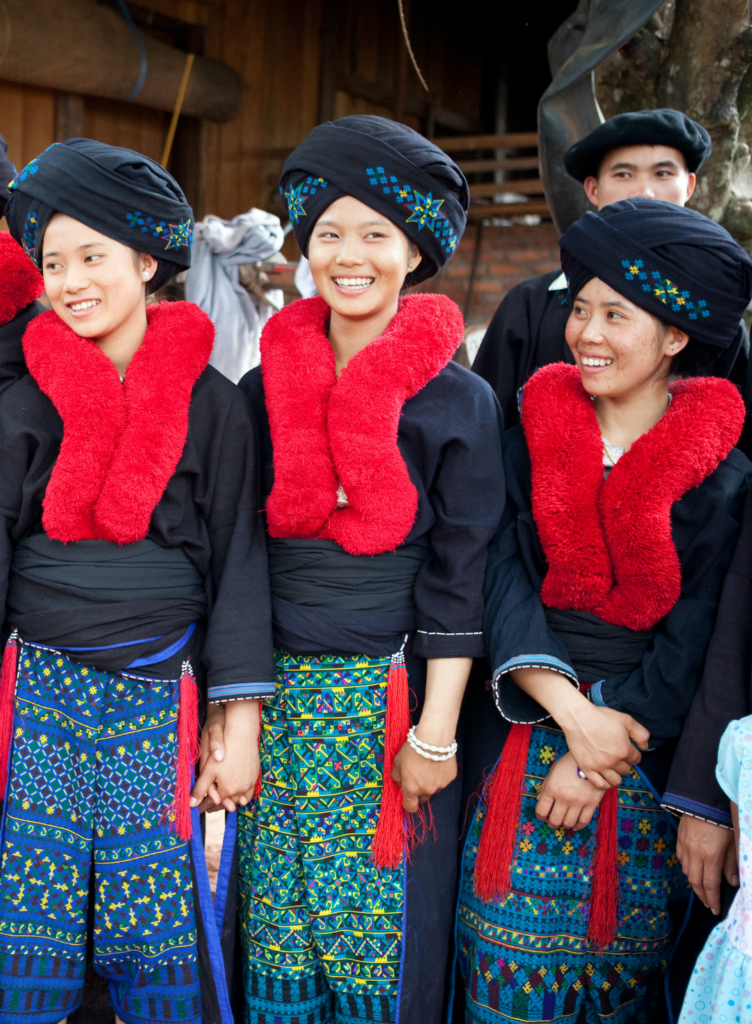
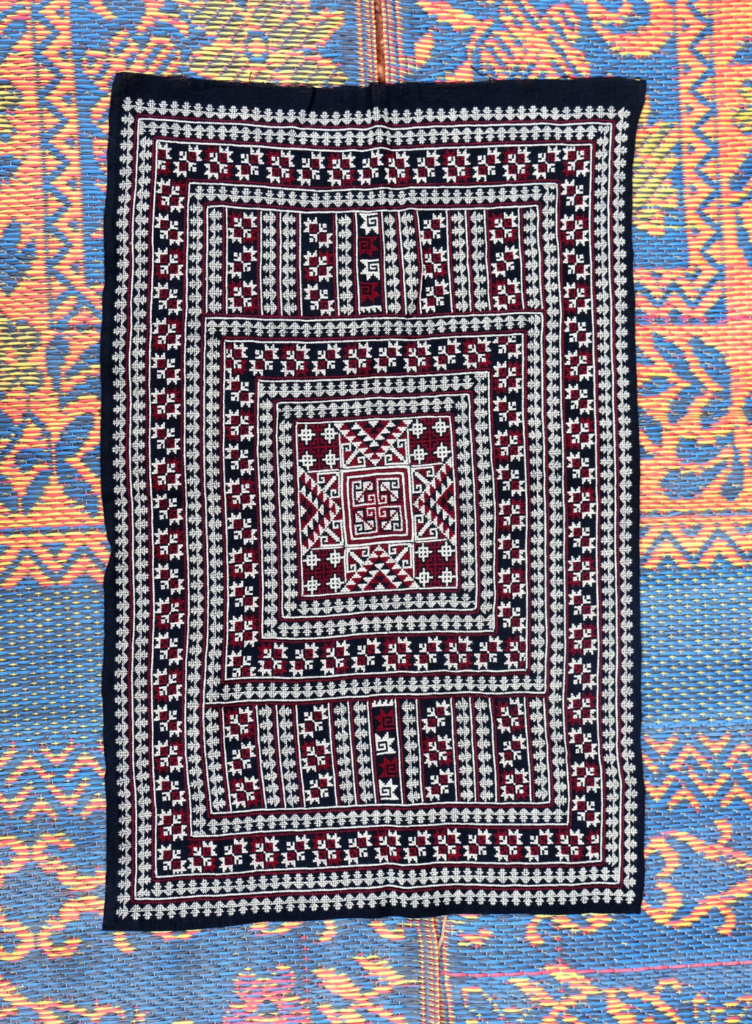
This is a traditional piece, typically made to be part of an Iu Mien bride’s outfit on her wedding day. It is the most distinctive element of the ensemble. The cloth is usually draped over the bride’s headwrap or displayed on a bamboo frame to make it appear even larger. Additional fringe and adornments are often added, but this embroidered square remains the most treasured part. That’s why Iu Mien artisans create such detailed and elaborate motifs for this piece.
The wedding will involve elders guiding the couple through ancestral blessing rites; the bride’s headpiece is worn during processions and ceremonies to signal her new role and communal support for fertility, longevity, and harmony. This piece is inspired by a wedding headscarf from one of the artisans who made it, preserving patterns and meaning.
Today their creation is in decline due to the time and cost required to complete one. Each thread is hand-stitched throughout; the edge features a hand-braided cord wrapped with pure silver.
Daoist Wall Hanging
Handmade by Lanten (Yao Mun) artisan Davone Seualikhamxay
Nam Dee VIllage, Luang Namtha
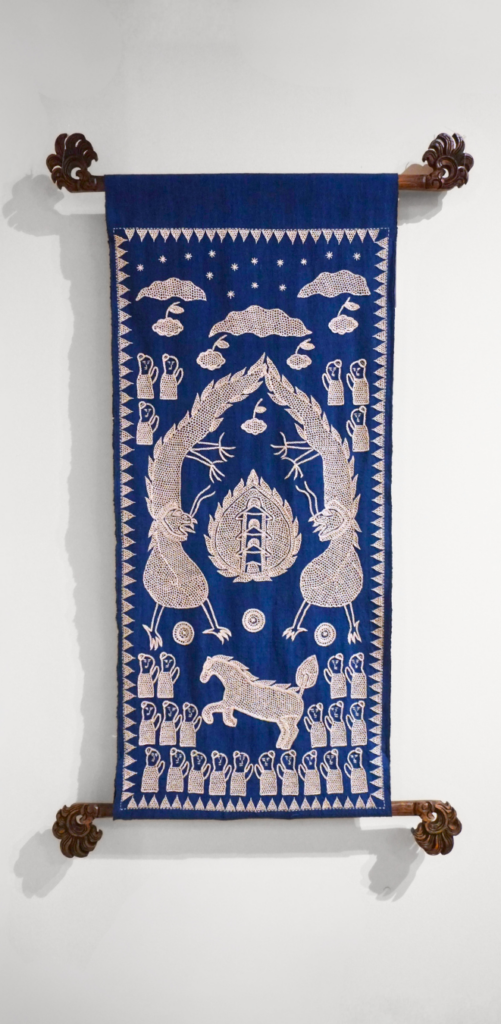
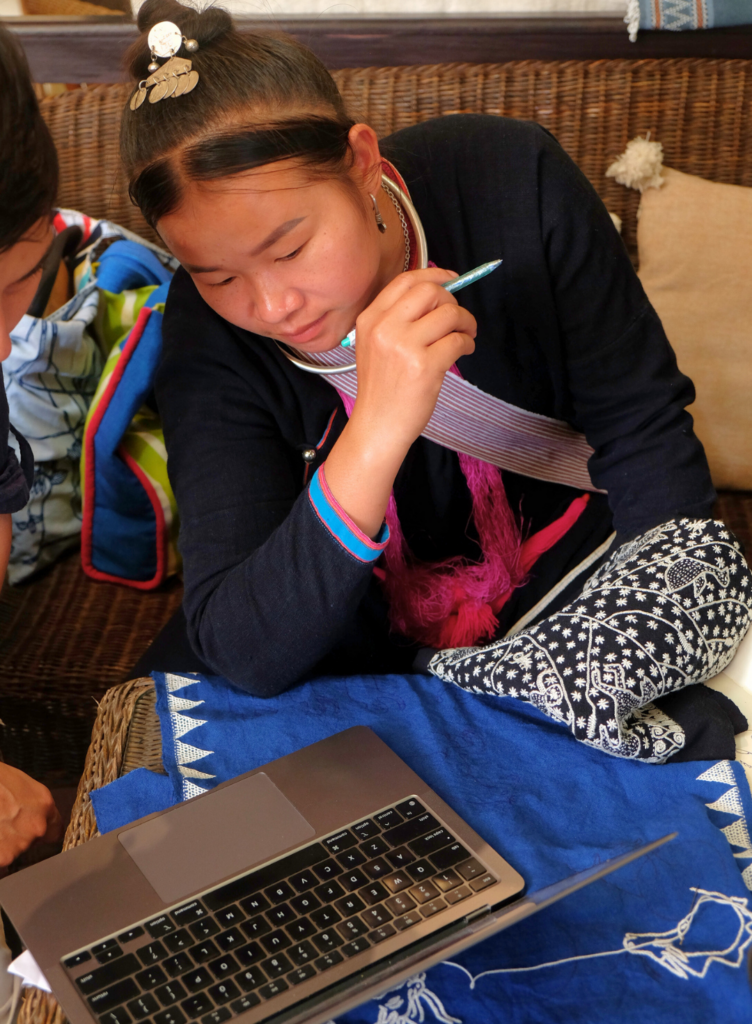
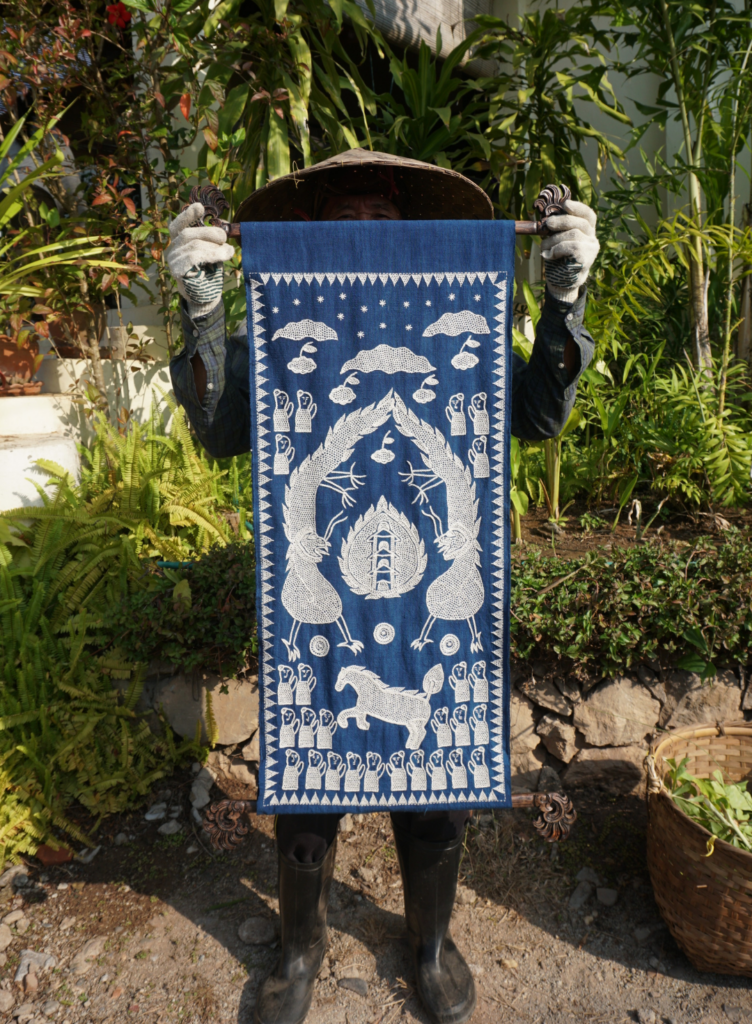
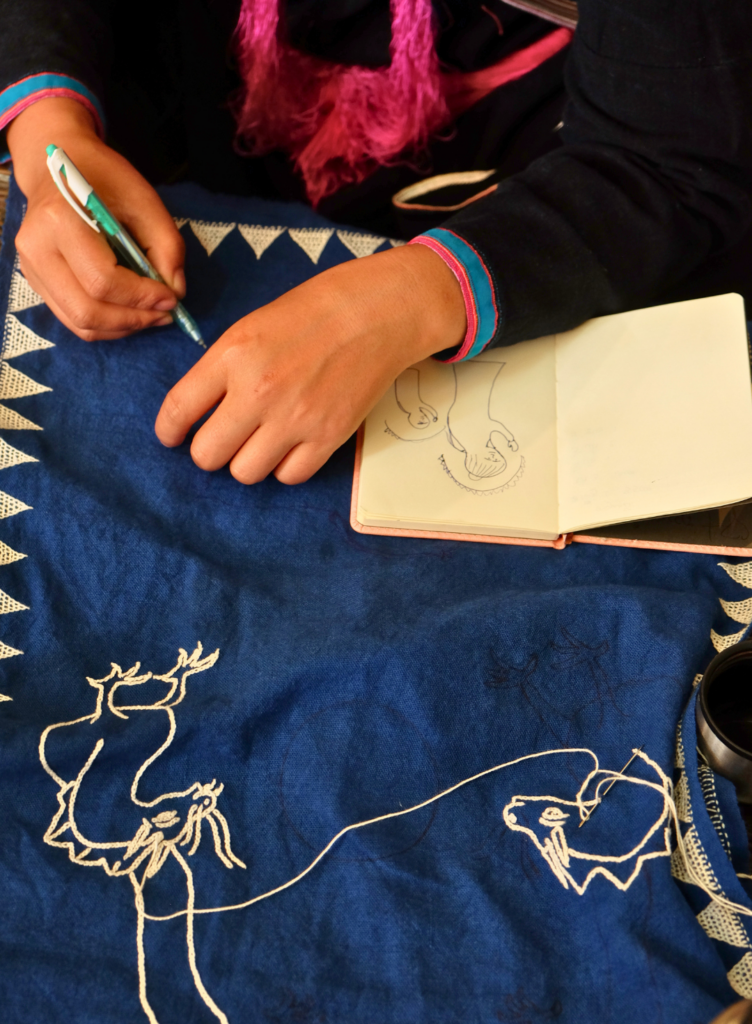
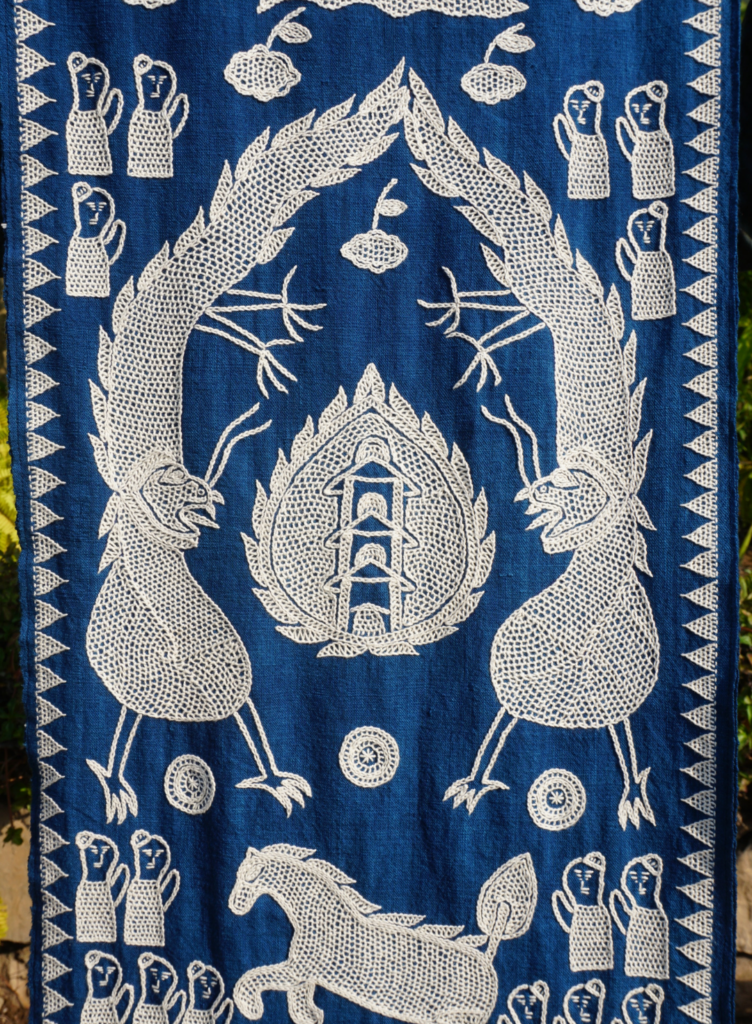
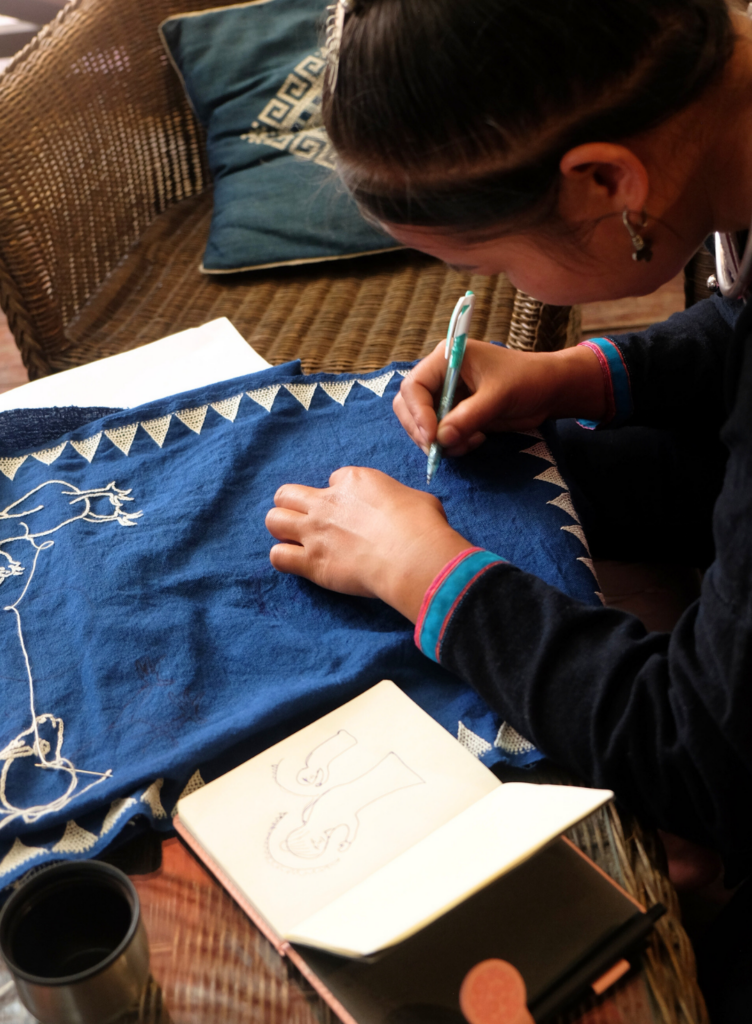
Lanten artisan Davone is a talented illustrator — she draws for many artisans in her community. This is not a formal role, so it came with no training or induction to traditional designs. As a result, some older Lanten motifs are in decline. TAEC had the opportunity to share two Lanten priest’s robes from our collection with Davone. These contained designs and figures which she wasn’t familiar with, as older pieces had been sold off before she began to draw. This hanging revives these designs from a century-old Lanten priest’s robe,
The piece is rich with symbolism: the horse represents speed and endurance, guiding those who follow a virtuous path. The centre motif depicts the Jade Emperor’s palace with a multi-tiered pagoda and a flame-like radiance, flanked by protective dragons. The xian, or divine beings who attend to the deities, fill the remainder of the hanging.
We were honoured to be able to play a role in facilitating the transmission of these designs back into the community. This is exactly the motivation behind the founding of TAEC, supporting living artisans in Laos to safeguard their tangible and intangible cultural heritage.